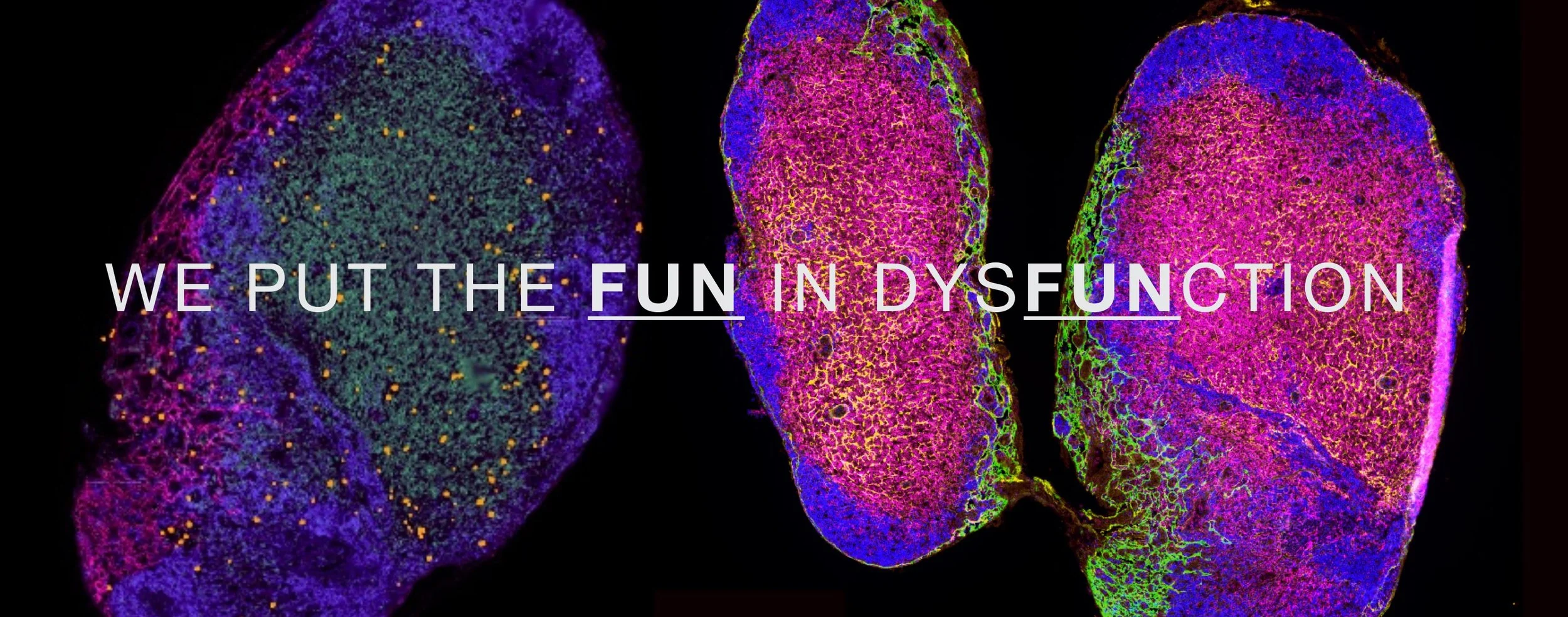
How T cells decide their fate
The Schietinger Lab in the Immunology Program at Memorial Sloan Kettering Cancer Center studies how the immune system, in particular T cells, interacts with its environment in cancer, autoimmunity and infection.
T cell differentiation is tightly regulated: it can produce functional cytotoxic and memory T cells, dysfunctional T cells, or self-reactive T cells that drive autoimmunity. We study the molecular mechanisms behind these outcomes.
Our research →Latest News
How does the immune system detect cancer cells?
We follow tumor-specific T cells from the earliest stages of tumor development to understand why they become dysfunctional.
What molecular programs determine T cell fates?
We map the transcriptional and epigenetic programs that set T cell fates during infection, tumor development and autoimmunity.
What drives self-reactive T cells in autoimmunity?
We study the stem-like autoimmune T cells that sustain disease such as type 1 diabetes.
